
Whiffle’s Large-Eddy Simulation (LES) model captures how wind, turbulence and clouds evolve in real weather, down to meter-scale resolution. GPU acceleration enables high-resolution simulations across large areas and operational timescales.
Conventional weather models typically operate at kilometer-scale resolution, representing smaller turbulent motions through parameterizations rather than resolving them directly.
LES uses a much finer computational grid to explicitly resolve the larger turbulent motions that shape local atmospheric conditions. This makes it possible to represent phenomena such as wind-farm wakes, turbulence around buildings and the transport of airborne substances in greater detail.
Whiffle couples LES with evolving large-scale weather conditions, allowing simulations to represent historical or forecast atmospheric events rather than being limited to idealized scenarios.
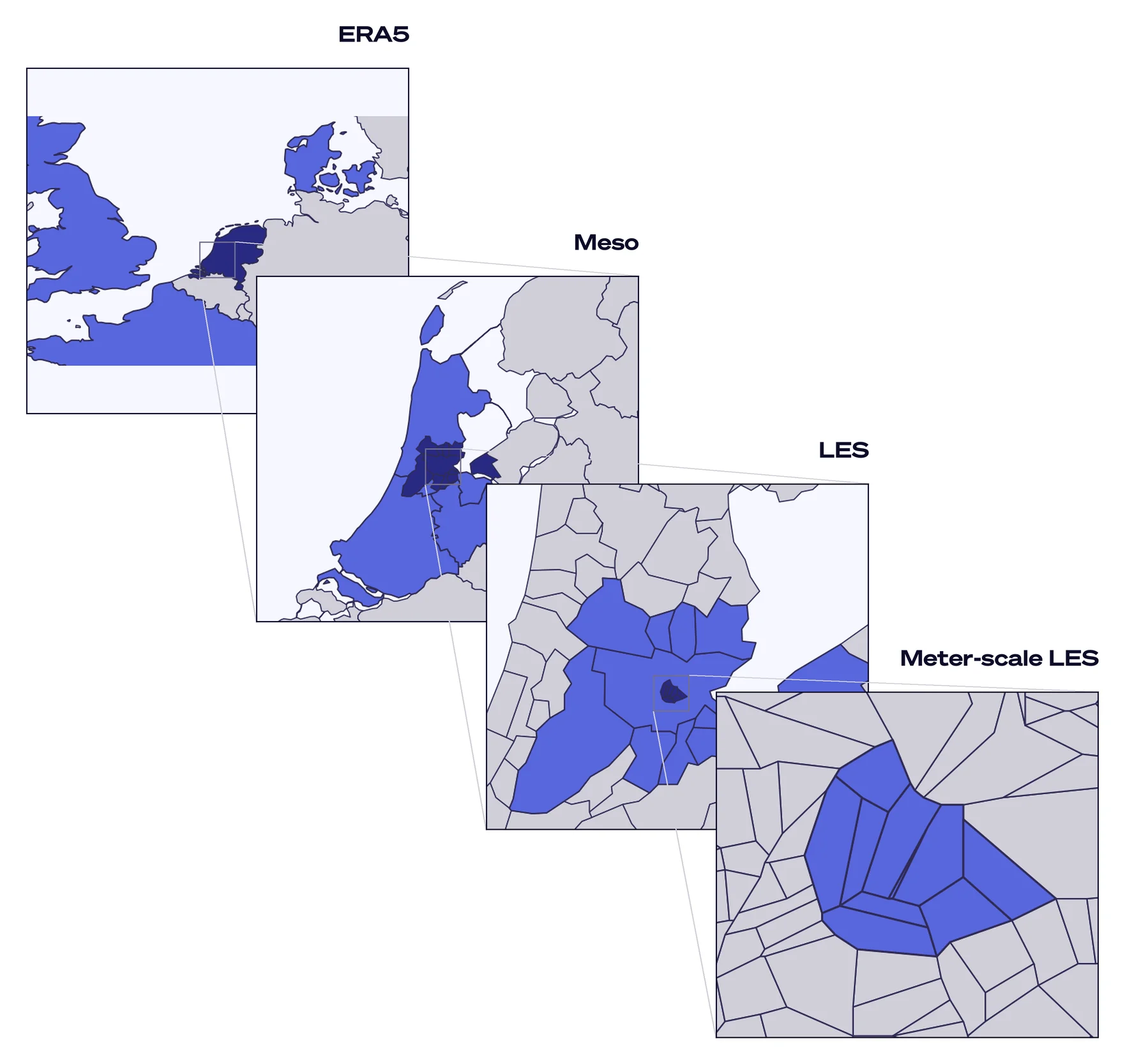
Whiffle combines large-scale weather information with high-resolution surface data, using nested simulations where finer spatial detail is required.

Driven by historical reanalysis data such as ERA5 or forecasts from ECMWF IFS, providing the evolving atmospheric conditions for each simulation.

High-resolution elevation, vegetation and land-use data represent how hills, forests, coastlines and other surface features influence local atmospheric flow.

Wind turbines, buildings and industrial structures can be included or modified to investigate their effects on surrounding wind conditions, turbulence and dispersion.
Whiffle LES simulates interacting atmospheric processes within a single physics-based modeling framework.
Three-dimensional wind, turbulence, shear and stability, as they change through the day and seasons.
Cloud formation and development, radiative processes and precipitation, including their interactions with atmospheric flow.
The transport and spread of gases and particles through changing atmospheric conditions, with configurable emission sources.
Turbine wakes, blockage and interactions between neighboring wind farms under varying atmospheric conditions.
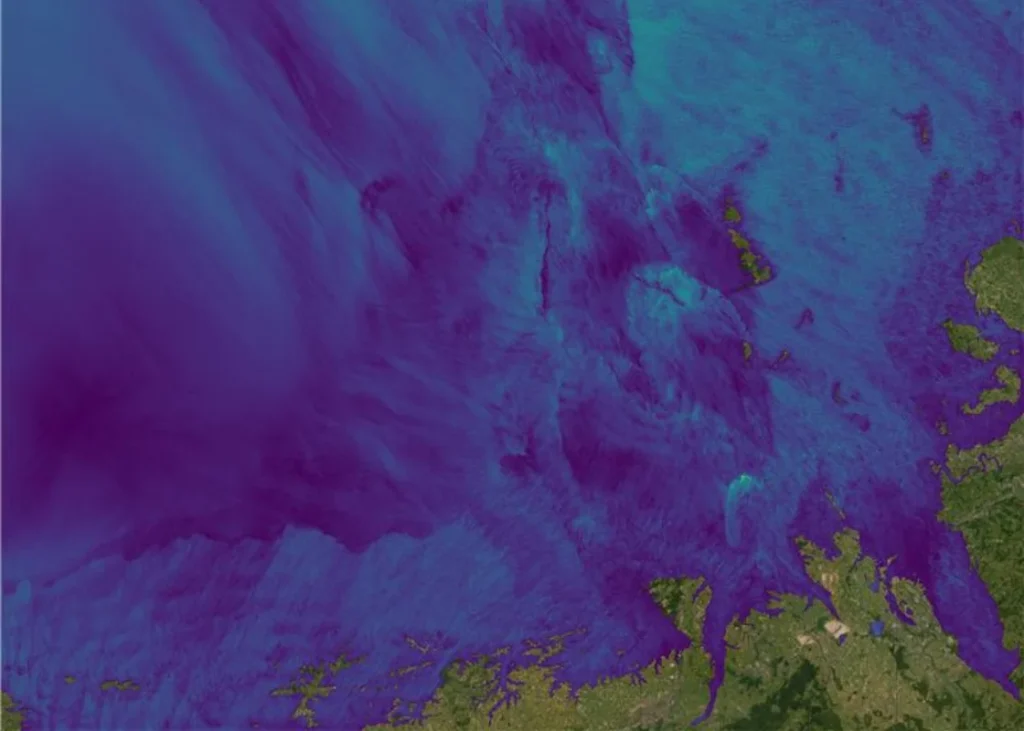
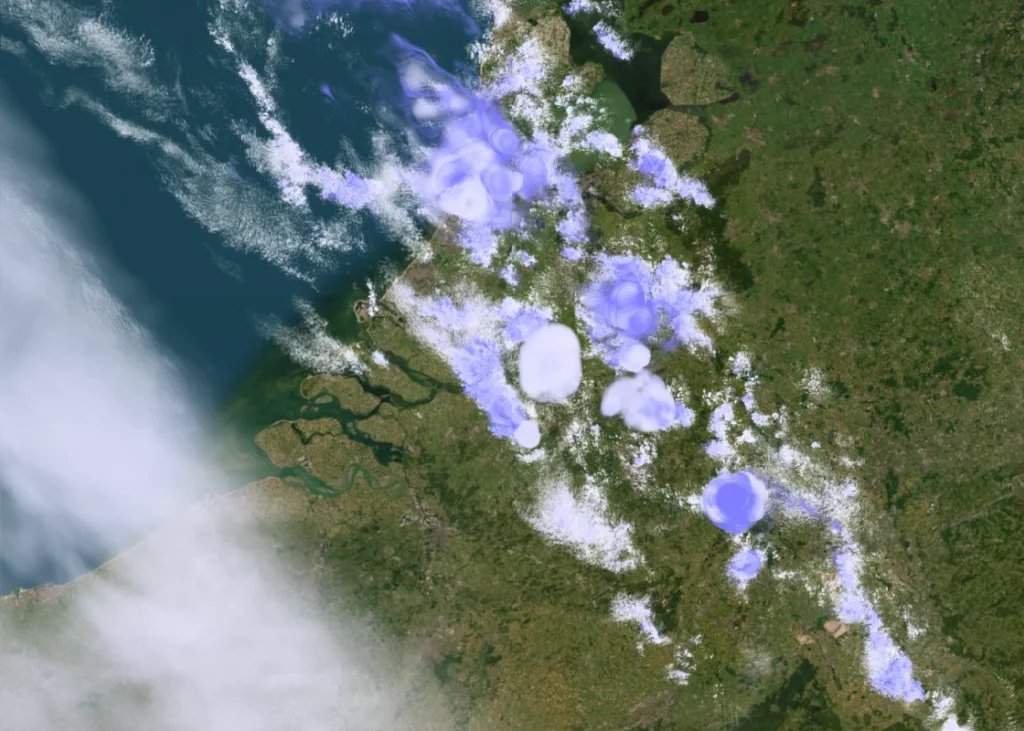
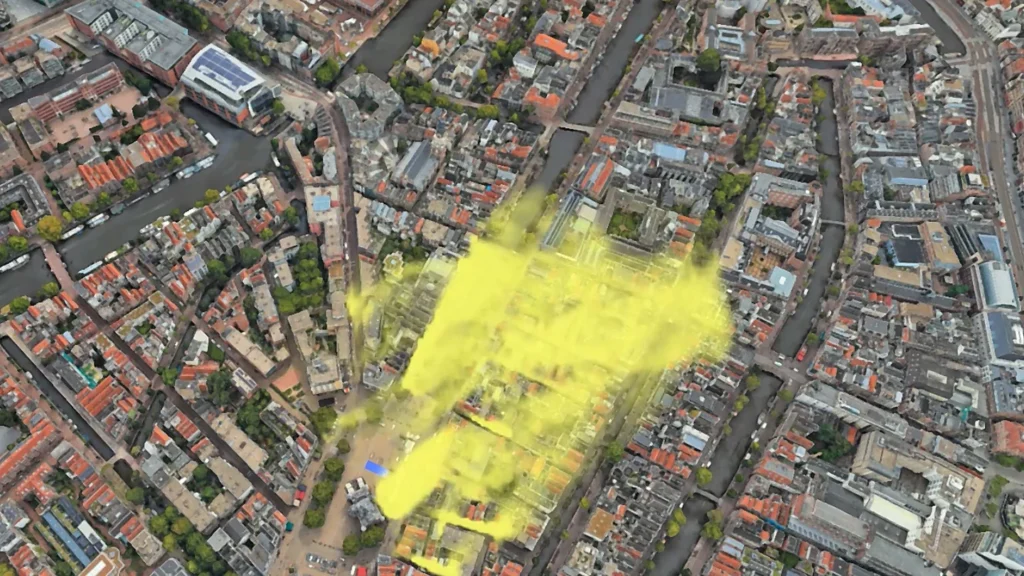
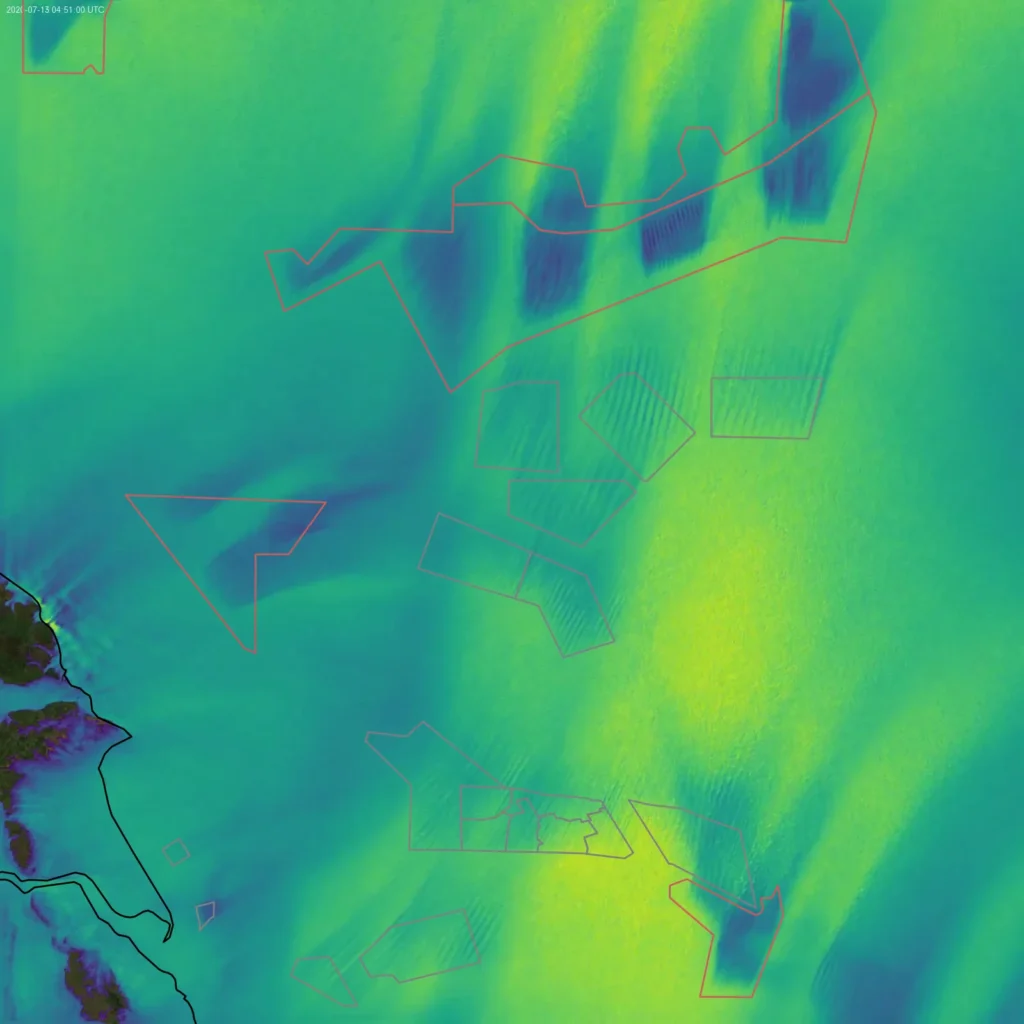
LES is computationally demanding, particularly across large areas and extended periods. Whiffle's LES model is purpose-built for GPU computing, with highly optimized code and a scalable architecture that makes high-resolution atmospheric simulations practical on commercial and operational timescales.

Simulation turnaround times, depending on domain size, resolution and simulated period.

Simulate extensive geographic areas and offshore wind-farm clusters within a single atmospheric domain.

Nested simulations progressively refine the resolution, from regional weather conditions to local flow and turbulence.
This North Sea simulation shows how Whiffle LES captures atmospheric flow and wind-farm interactions under changing weather conditions. While focused on offshore wind, the same modeling framework supports applications from weather forecasting and wind-resource assessment to atmospheric dispersion and urban flow modeling.
Driven by historical weather data rather than idealized atmospheric scenarios.

Captures how wakes develop, extend downstream and interact with neighboring wind farms.

Resolves atmospheric flow and turbulence across an extensive offshore region.

Run Whiffle LES on your own infrastructure, with your own team.

Access long-term mesoscale wind data and high-resolution LES simulations for wind-resource assessment and energy-yield analysis.

Work with our scientists on bespoke simulations and analysis.
Use LES as an additional input to improve wind and solar power forecasts for trading and operations.
Whiffle LES has been evaluated against field measurements and operational data across a range of atmospheric conditions, from complex onshore terrain to offshore wind farms. Explore the studies behind its performance.
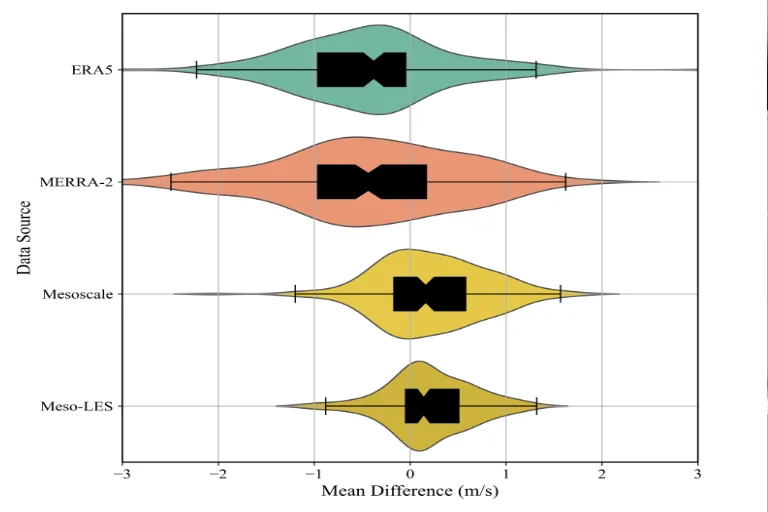

In RWE’s independent benchmark, Whiffle Meso-LES achieved the lowest absolute mean wind-speed bias most often among the evaluated datasets, with its strongest performance in moderate and complex terrain.
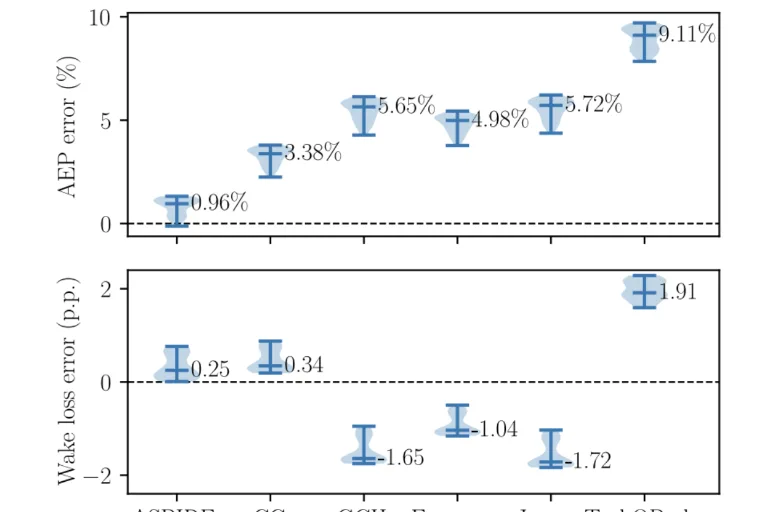
Against two years of SCADA data at Hollandse Kust Noord, Whiffle achieved 0.96% AEP error, versus 3.38% for the best conventional wake model.
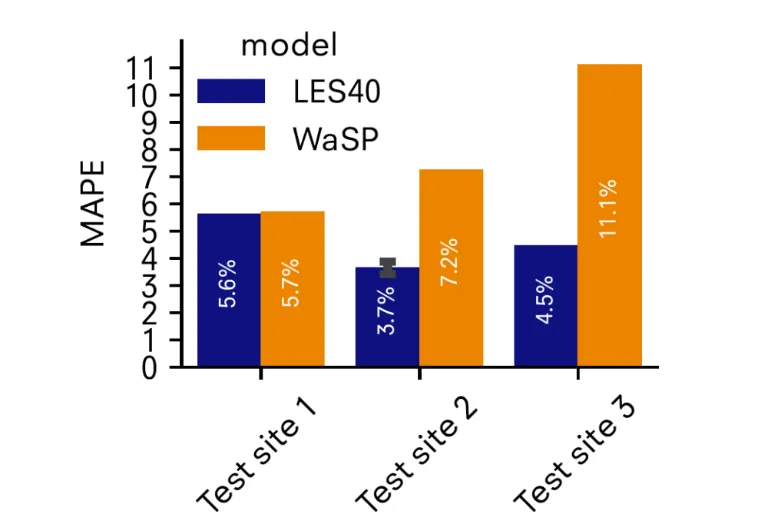
Across three complex, forested sites, nested Whiffle LES down to 40 m achieved wind-speed cross-prediction MAPE of 3–5%, compared with 6–12% for a linear-flow model.
Conventional weather models parameterize turbulent motions that occur below their grid resolution. Whiffle LES explicitly resolves the larger turbulent motions, providing a more detailed representation of atmospheric flow, turbulence and interactions with terrain, buildings and other surface features.
Whiffle LES typically operates at approximately 100 m horizontal resolution across large domains, with nested simulations reaching meter-scale resolution where required. The achievable resolution, domain size and simulation period depend on the application and available computing resources.
Yes. Whiffle LES can use atmospheric conditions derived from reanalysis datasets such as ERA5 or forecast models such as ECMWF IFS. This allows simulations to represent evolving real-world weather conditions rather than being limited to idealized atmospheric scenarios.
Whiffle LES represents three-dimensional wind flow, turbulence, atmospheric stability, clouds and radiative processes. It also supports modeling of turbine wakes and blockage, atmospheric dispersion and cloud microphysics, depending on the simulation configuration.
Both options are available. Whiffle License enables organizations to deploy the LES model on supported GPU infrastructure. Alternatively, Whiffle provides access to simulations through its products and offers bespoke modeling and analysis through Expert Services.
Tell us what you're modeling. We'll help you determine whether Meso, LES or a combination of both fits your application.
Meter-scale weather simulation for the sectors where weather drives decisions.
Peer-reviewed papers and technical reports
Articles and perspectives from our team
Conferences, webinars and on-demand recordings
Technical guides for the Whiffle platform
Get help from our team
Atmospheric science and Whiffle news in your inbox
Explore simulations from wind farms to city streets