
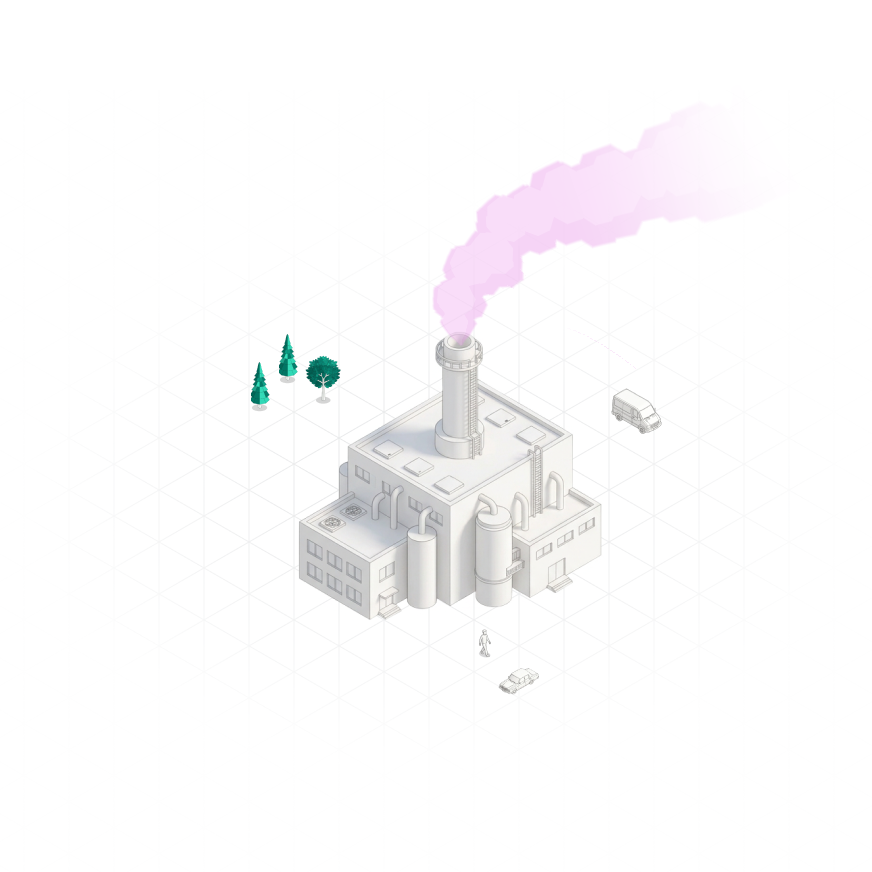
Trace gas releases, map pollutant dispersion and assess heat exchange so you can identify likely emission sources and understand what affects cooling performance.
Industrial facilities are complex environments. Infrastructure, equipment and the surrounding terrain influence how air moves, while changing weather conditions affect turbulence, atmospheric mixing and the transport of heat and airborne substances.
These interactions matter when investigating emissions or understanding how exhaust air moves around cooling equipment.
Yet conventional assessments may rely on simplified wind conditions or modeling approaches that do not fully capture how changing weather interacts with buildings, structures and other site infrastructure.
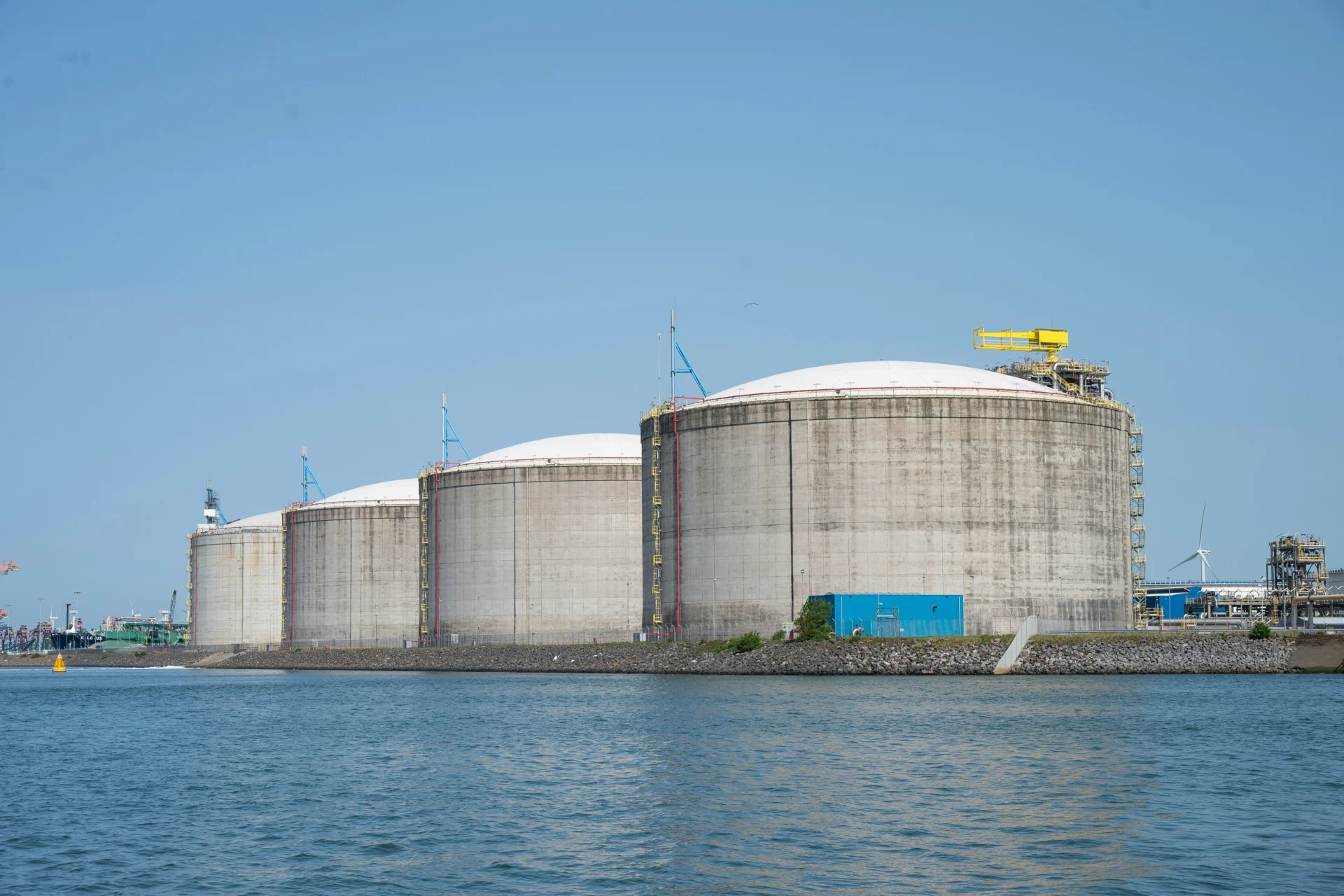
Simulate how exhausts from air-cooled heat exchangers interact with the atmosphere. Compare equipment layouts and orientations during industrial facility design or operations.
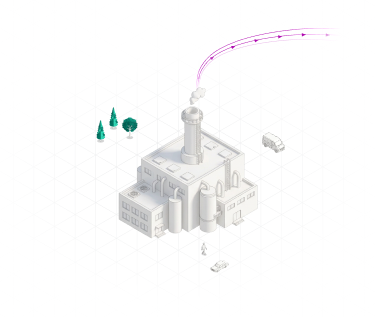
When a sensor, drone or satellite detects a release, reconstruct the wind across the facility at that time and trace the gas toward likely source locations. Focus inspection on a shortlist of equipment rather than searching the entire area.
Simulate how pollutants are transported and mixed through the facility and beyond its boundary as weather conditions change. Assess how downwind concentrations vary to support environmental assessment, permitting and operational decisions.
Choose how you want to use Whiffle for your project.
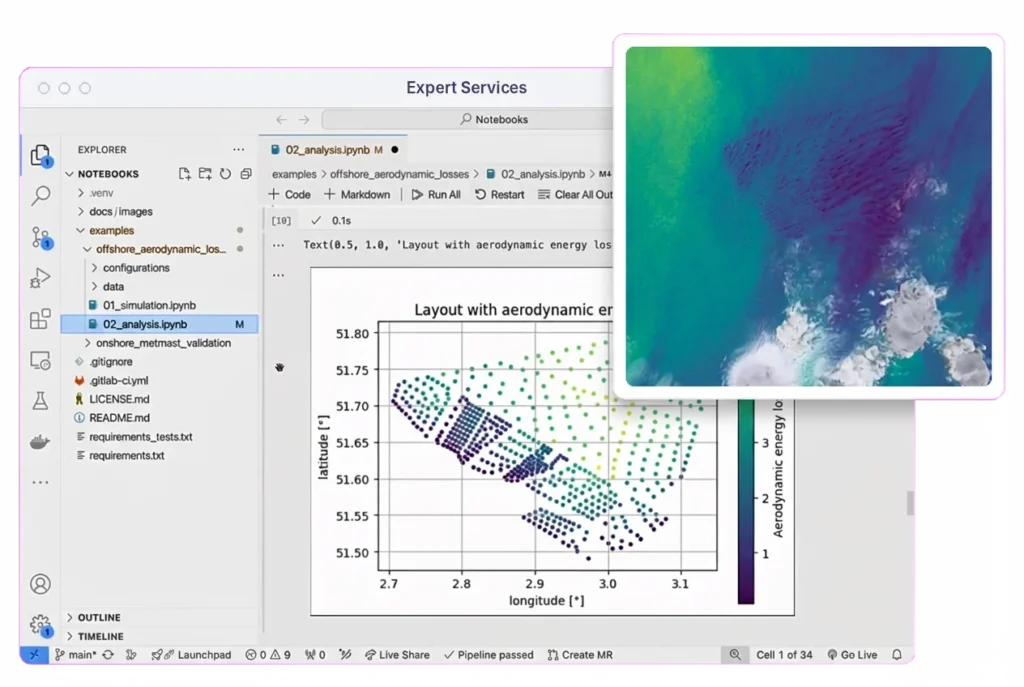
Our atmospheric scientists and engineers scope, run and analyze simulations for your site and design question.
Give your in-house experts the model to run bespoke cases on your own infrastructure.
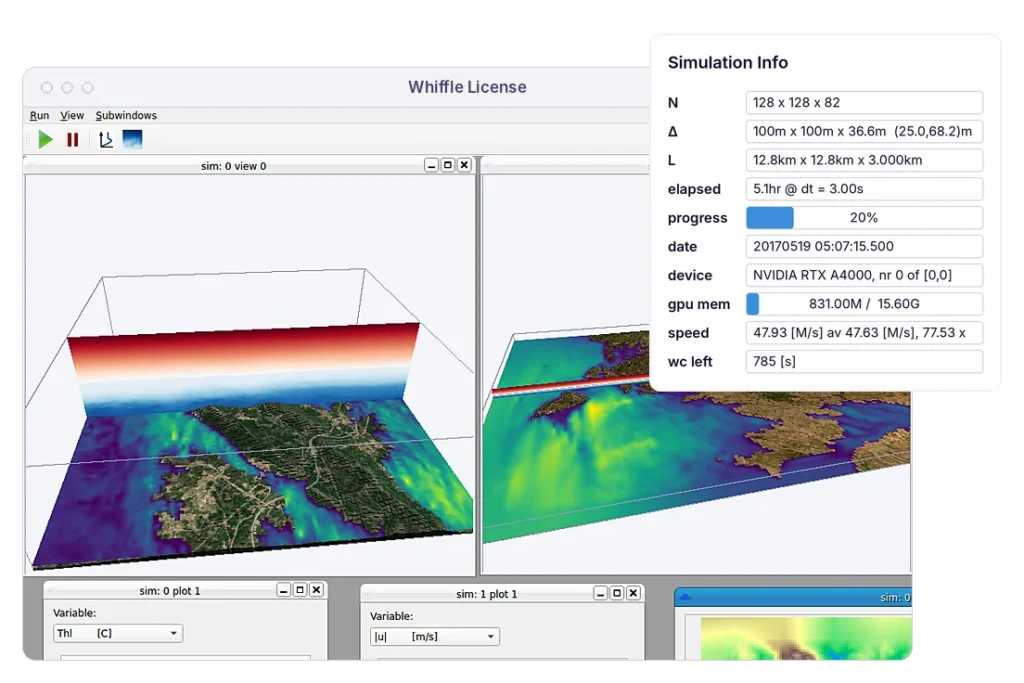
Industrial sites bring together complex structures, heat sources, emissions and changing weather conditions. Whiffle uses real-weather Large-Eddy Simulation (LES) to capture how these factors interact, with the spatial detail and computational speed needed for practical engineering assessments.

Simulate how infrastructure, equipment, heat sources and surrounding terrain influence airflow, turbulence and the movement of heat and emissions.

Represent site layouts, emission sources and operating scenarios to investigate airflow, dispersion and potential design or operational changes.

GPU acceleration enables high-resolution simulations in minutes to hours, depending on the domain and configuration, making it practical to investigate different facility layouts and scenarios.
A survey vehicle detects elevated methane levels near a refinery. But where did the gas come from? With multiple potential sources across the facility, knowing the wind direction at the detection point isn’t enough to determine where the methane originated.
This prototype uses the Whiffle LES model to simulate how wind moves across the refinery, including the changes in direction and turbulence around buildings and industrial structures. More than a million tracer particles are released across the site. By identifying which particles reach the vehicle when the methane spike is recorded, the simulation helps narrow down where the gas could have originated.
Instead of searching the entire facility, operators can focus their investigation on the most likely source areas. The prototype demonstrates how high-resolution atmospheric simulations can support more targeted methane leak investigations.
When local airflow and changing weather conditions could materially affect an engineering assessment, particularly where infrastructure, buildings or the surrounding terrain create complex flow patterns. LES can provide additional detail where simpler modeling approaches may not be sufficient.
Yes. Atmospheric LES can provide detailed wind, turbulence and dispersion information to support further engineering analysis, including assessments of heat exchange and emissions. It can complement existing CFD, dispersion and equipment-performance models rather than replace them.
Site layout, terrain information and available meteorological measurements can help define a representative simulation. Depending on the study, additional information such as emission characteristics or equipment configurations may be required.
A study is scoped around your engineering question, including the relevant weather conditions, simulation area and scenarios. Results may include wind and turbulence fields, concentration distributions, time series and visualizations, with analysis tailored to your requirements.
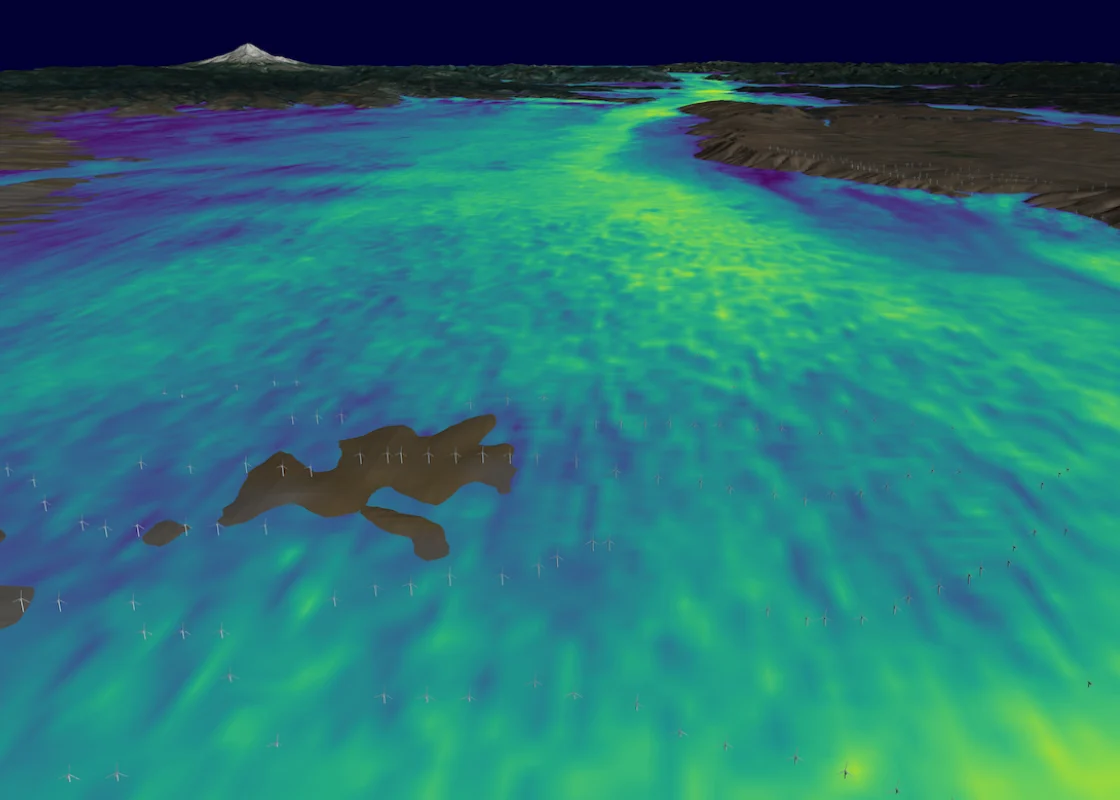

Learn how LES resolves turbulence and local flow within changing weather conditions.
For custom industrial applications, work directly with Whiffle scientists and engineers to define and run the right modeling approach.
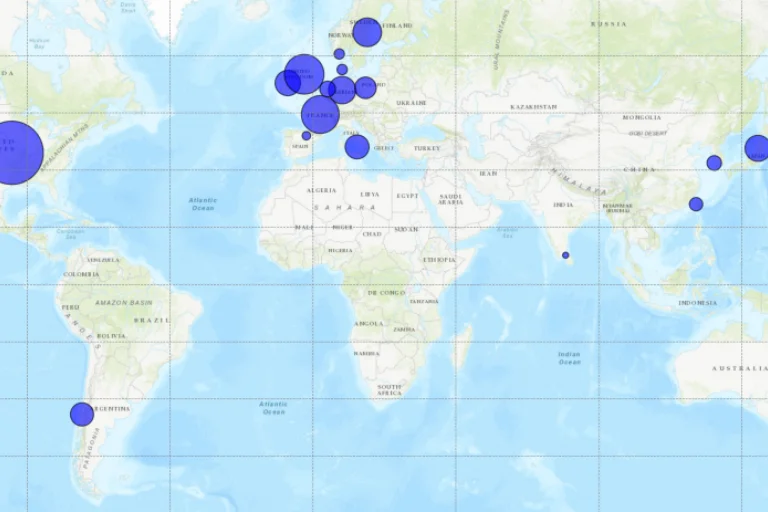
Explore research and applications showing how high-resolution atmospheric modeling is used to investigate real-world flow and transport.
Tell us about the emissions, airflow or heat exchange question you’re investigating and the decision it needs to support. We’ll assess whether Whiffle’s modeling approach is suitable.
Meter-scale weather simulation for the sectors where weather drives decisions.
Peer-reviewed papers and technical reports
Articles and perspectives from our team
Conferences, webinars and on-demand recordings
Technical guides for the Whiffle platform
Get help from our team
Atmospheric science and Whiffle news in your inbox
Explore simulations from wind farms to city streets