Validation

Validation & accuracy

Explore validation studies and research evaluating Whiffle's atmospheric models against measurements across different environments and applications.

Search
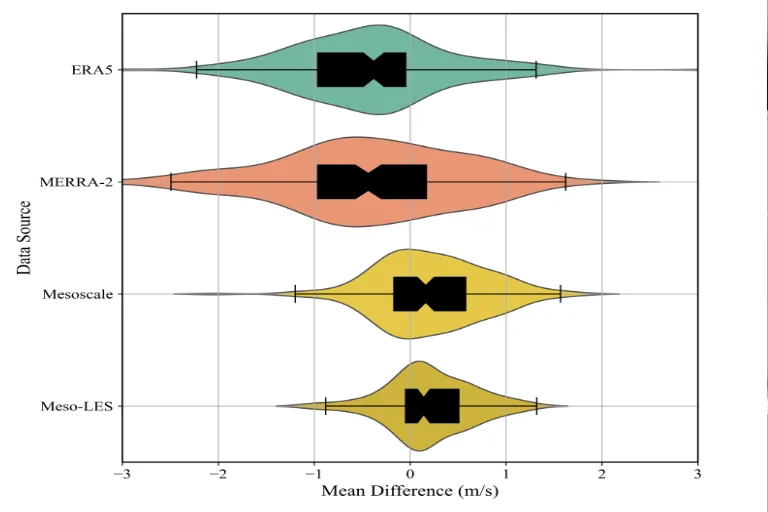
Violin plot of wind-speed bias per data source
RWE · TORQUE 2026
Lowest absolute wind-speed bias most often across 170 sites

In RWE’s independent benchmark, Whiffle Meso-LES achieved the lowest absolute mean wind-speed bias most often among the evaluated datasets, with its strongest performance in moderate and complex terrain.

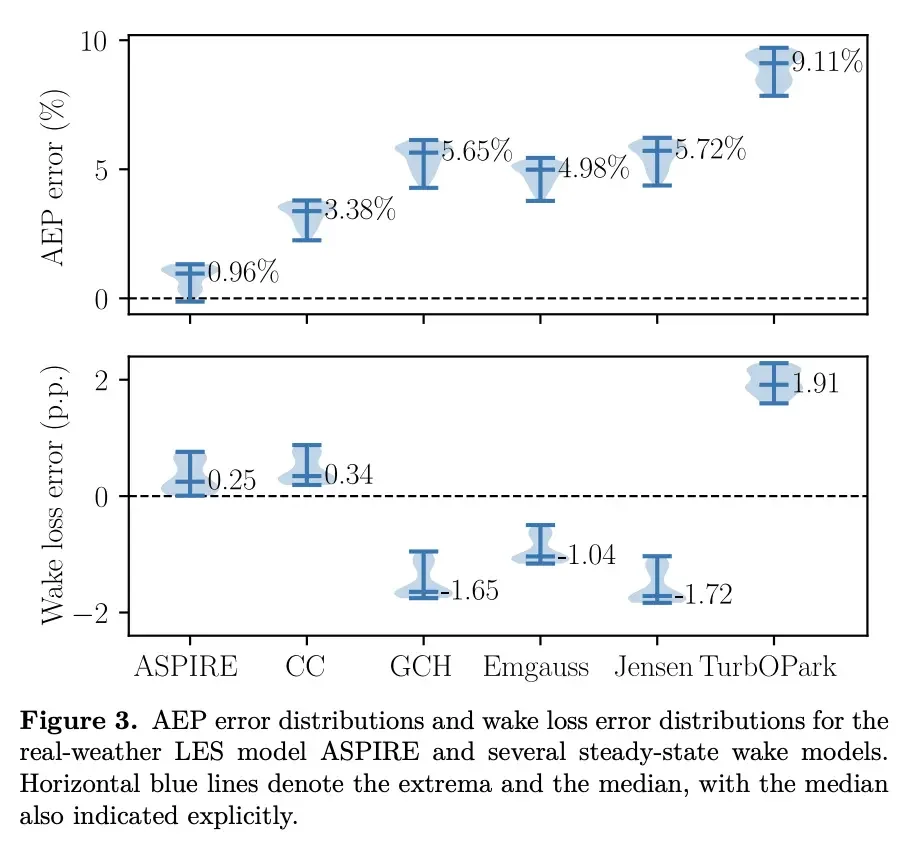
Chart of AEP and wake loss errors from the HKN study
Shell · TORQUE 2026
HKN study: 3.5× lower AEP error than the best conventional model tested

Against two years of SCADA data at Hollandse Kust Noord, Whiffle achieved 0.96% AEP error, versus 3.38% for the best conventional wake model.

Cover of the publication: Bridging scales: Explicit forest representation and full-physics LES for improved wind resource modeling
Perigus Energy · WindEurope 2026
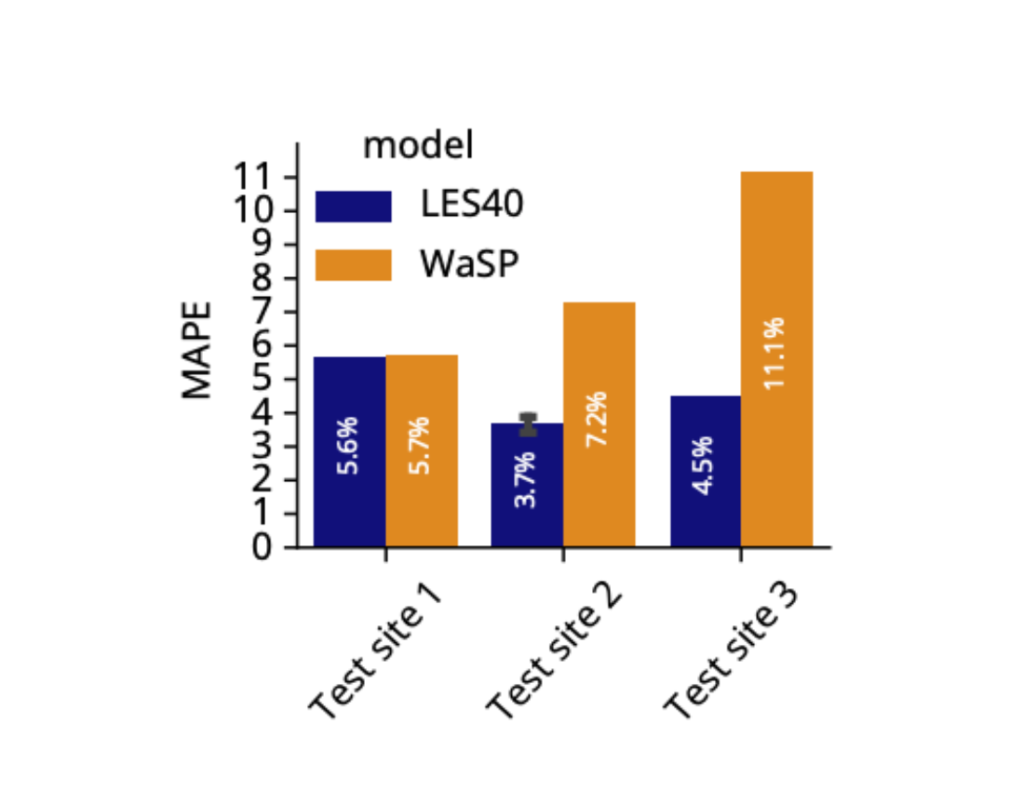
3–5% wind-speed cross-prediction error at complex, forested sites

Across three complex, forested sites, nested Whiffle LES down to 40 m achieved wind-speed cross-prediction MAPE of 3–5%, compared with 6–12% for a linear-flow model.

The Eddy Effect

Our monthly newsletter on atmospheric research, model updates and product releases.

This site is protected by reCAPTCHA and the Google Privacy Policy and Terms of Service apply.

Read about our privacy policy.

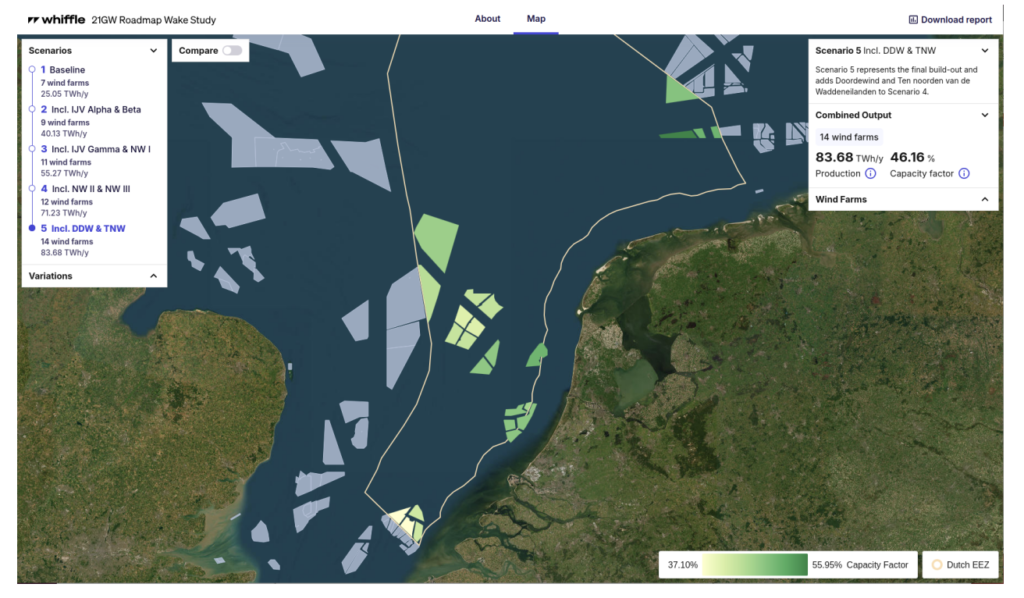
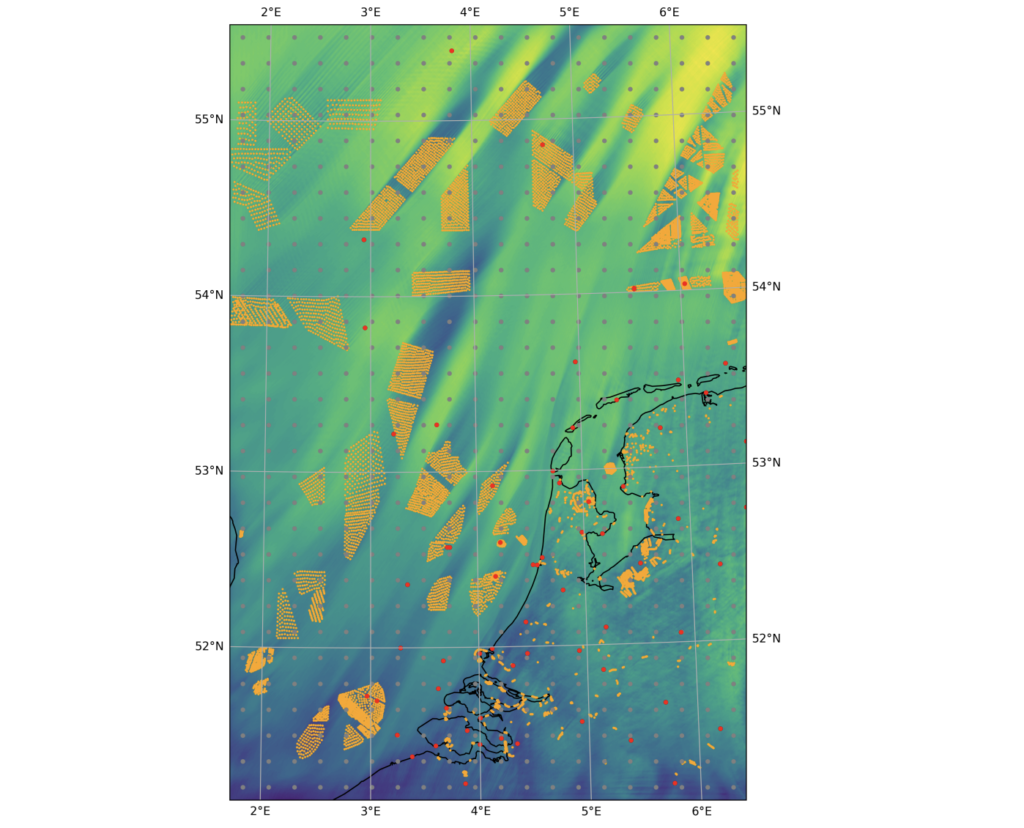
21 GW roadmap wake study commissioned by RVO, Netherlands Enterprise Agency
RVO · Wake study 2026
21 GW roadmap wake study commissioned by RVO, Netherlands Enterprise Agency

Whiffle’s LES was used to model the full Dutch 21 GW offshore wind roadmap, delivering annual energy production estimates and detailed insight into farm-to-farm wake and blockage effects.

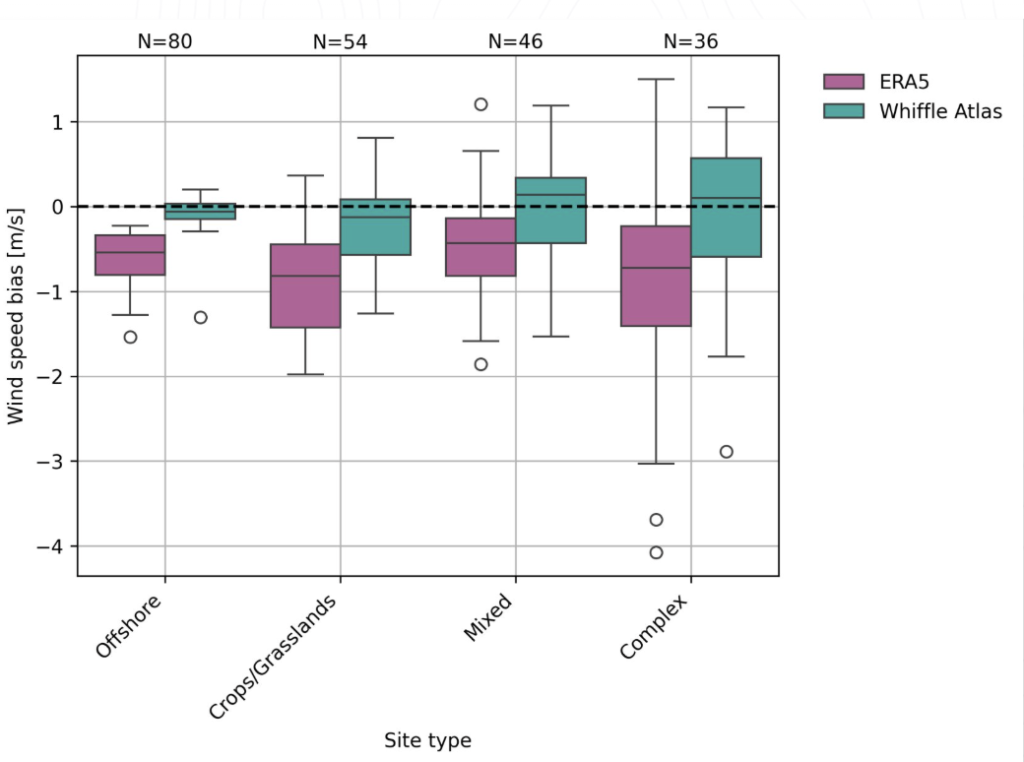
Whiffle Atlas validation on 108 sites (RWE, GE, Ørsted & public data)
Whiffle Atlas · Validation report 2026
Whiffle Atlas validation on 108 sites (RWE, GE, Ørsted & public data)

Whiffle Atlas achieves a near-zero mean wind speed bias of –0.09 m/s across 108 sites — compared to –0.706 m/s for ERA5 — with tighter scatter and less systematic underestimation across all terrain types.

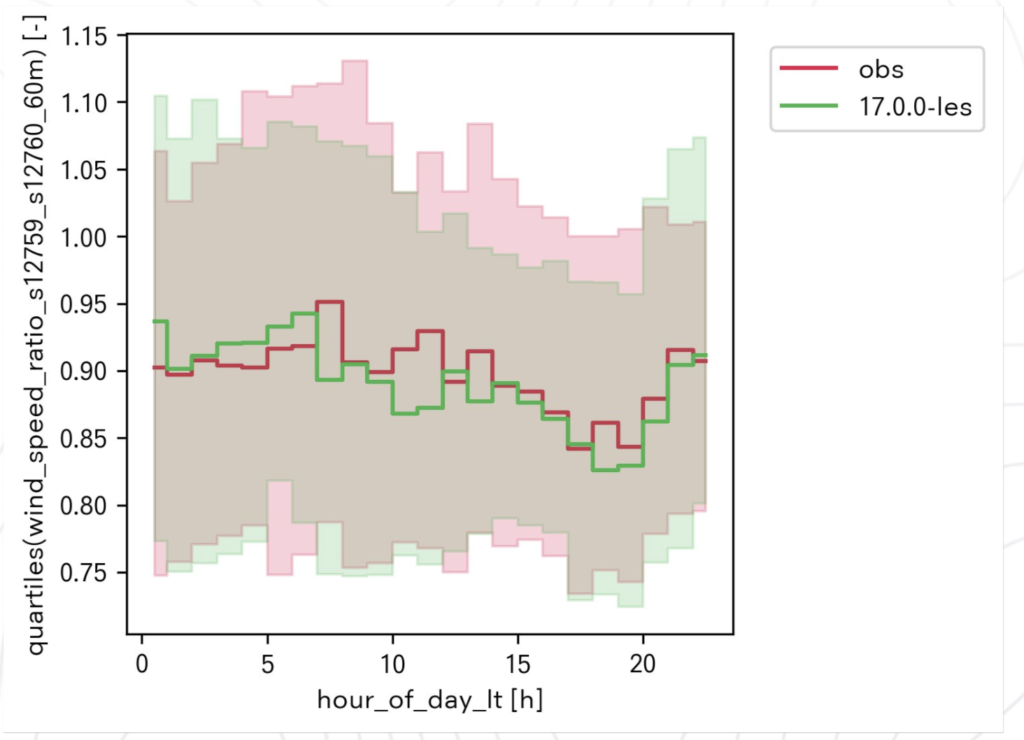
Cross-prediction of wind and turbulence using Whiffle LES
Cross-prediction · Validation report 2025
Cross-prediction of wind and turbulence using Whiffle LES

Cross-prediction of wind speed and turbulence intensity validated across ~20 sites with multiple measurement locations. A comparison with WAsP was presented with Ørsted at the WindEurope Annual Event 2026.

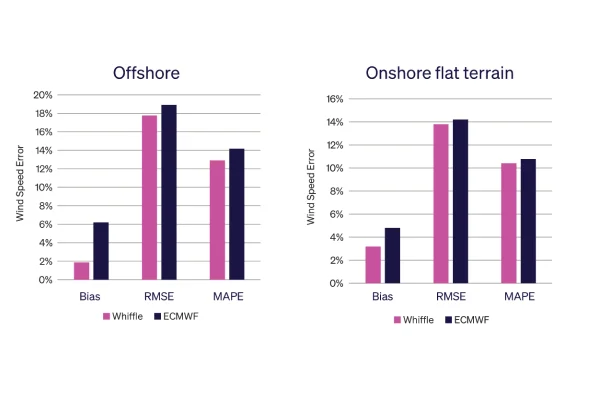
Bar charts of bias, RMSE and MAPE for Whiffle and ECMWF offshore and onshore
Whiffle Forecast · Verification 2025
Whiffle day-ahead vs ECMWF day-ahead

Wind speed forecasts verified against SCADA data of wind parks in NW-Europe, 2021–2023.

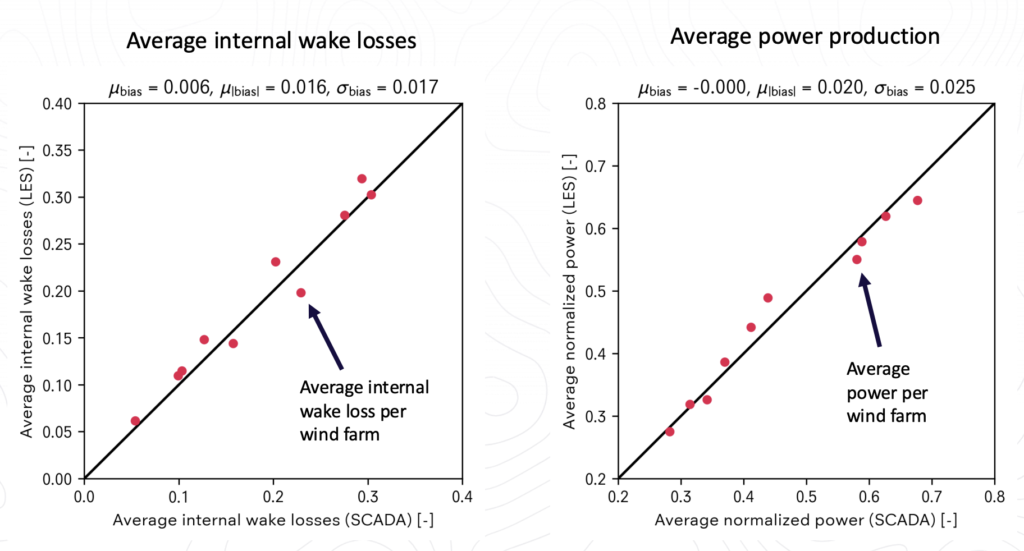
Going beyond the mean: Wind farm power production validation (WindEurope 2025)
Power production · WindEurope 2025
Going beyond the mean: Wind farm power production validation (WindEurope 2025)

Multi-year, time series-based validation of mesoscale-coupled LES across 10 operational wind farms, analyzing 300,000+ ten-minute instances of real SCADA data. Results show internal wake losses varying between 20–40% depending on atmospheric conditions — with atmospheric stability having at least as much impact as wind direction. LES with real weather inputs accurately captures the full distribution of wake losses, not just the mean.

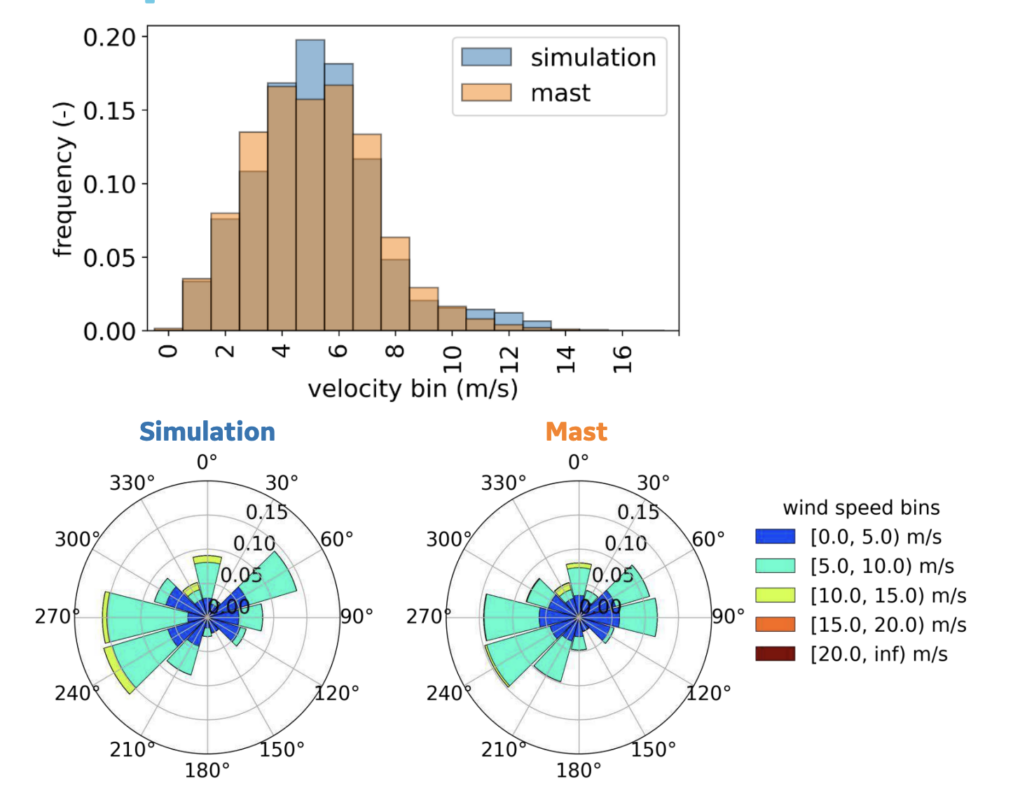
Mesoscale-coupled LES for WRA (Storey & Rauffus, GE Vernova – TORQUE 2024)
GE Vernova · TORQUE 2024
Mesoscale-coupled LES for WRA (Storey & Rauffus, GE Vernova – TORQUE 2024)

Published validation of mesoscale-coupled LES across 24 wind farm sites, benchmarked against over 100 years of measurements — demonstrating step-change accuracy in wind speed, turbulence, and directional prediction compared to conventional methods.

WINS50: Winds of the North Sea in 2050 (Whiffle, TU Delft & KNMI)
TU Delft & KNMI · WINS50 2024
WINS50: Winds of the North Sea in 2050 (Whiffle, TU Delft & KNMI)

A four-year collaborative research project simulating present-day and hypothetical 2050 offshore wind scenarios across the entire North Sea using both HARMONIE-AROME and a newly developed North Sea-scale version of Whiffle’s LES model. Results show large areas of the North Sea affected by cluster wake effects in a 2050 scenario, with wind farm efficiency lower than today — and that increasing individual turbine rated power while keeping total installed capacity fixed can significantly boost production.

Wind resource modeling of entire sites using LES (GE Vernova, WindEurope 2023)
GE Vernova · WindEurope 2023
Wind resource modeling of entire sites using LES (GE Vernova, WindEurope 2023)

GE Vernova’s independent application of Whiffle’s LES across 14 diverse sites, validating wind speed, turbulence intensity, and directional accuracy — confirming LES is feasible and accurate for full-site wind resource assessment at commercial scale.