Physics-based simulation of how weather interacts with terrain, vegetation and structures - so you can plan, design, invest and operate with greater confidence.
Full-physics atmospheric simulation at a scale and speed previously out of reach
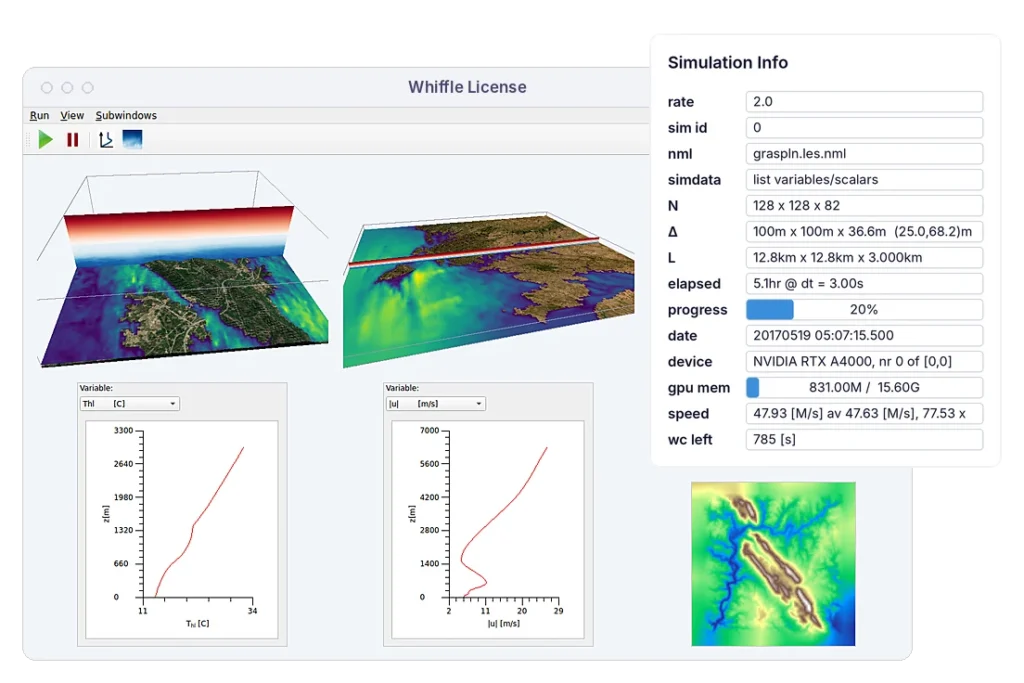
For over a decade, we've developed and refined our GPU-native Large-Eddy Simulation (LES) model to make detailed atmospheric simulations practical for real-world challenges, from renewable energy to complex urban and industrial environments.
Local effects, resolved
Simulate atmospheric turbulence, stability and complex airflow to better understand how weather interacts with terrain, buildings and vegetation.
Site-level detail at scale
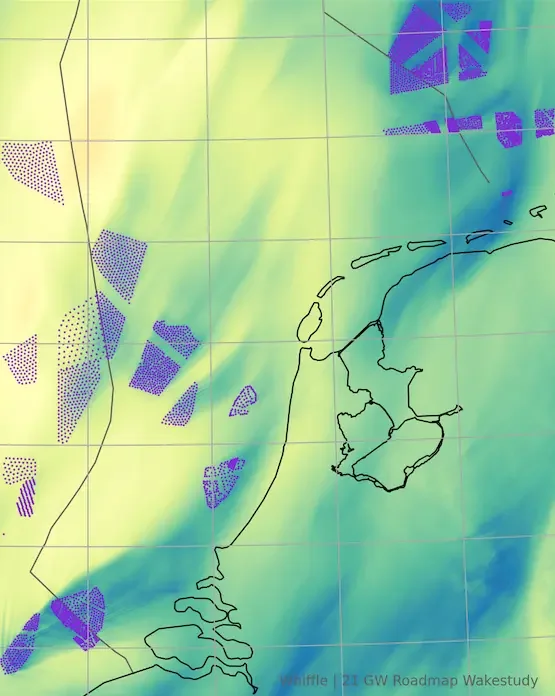
Resolve local atmospheric conditions in high resolution while capturing the wider weather patterns that influence them.
Built for practical use
GPU-native computing makes detailed simulations feasible within commercial project timelines.
Solutions
Your weather question, answered your way
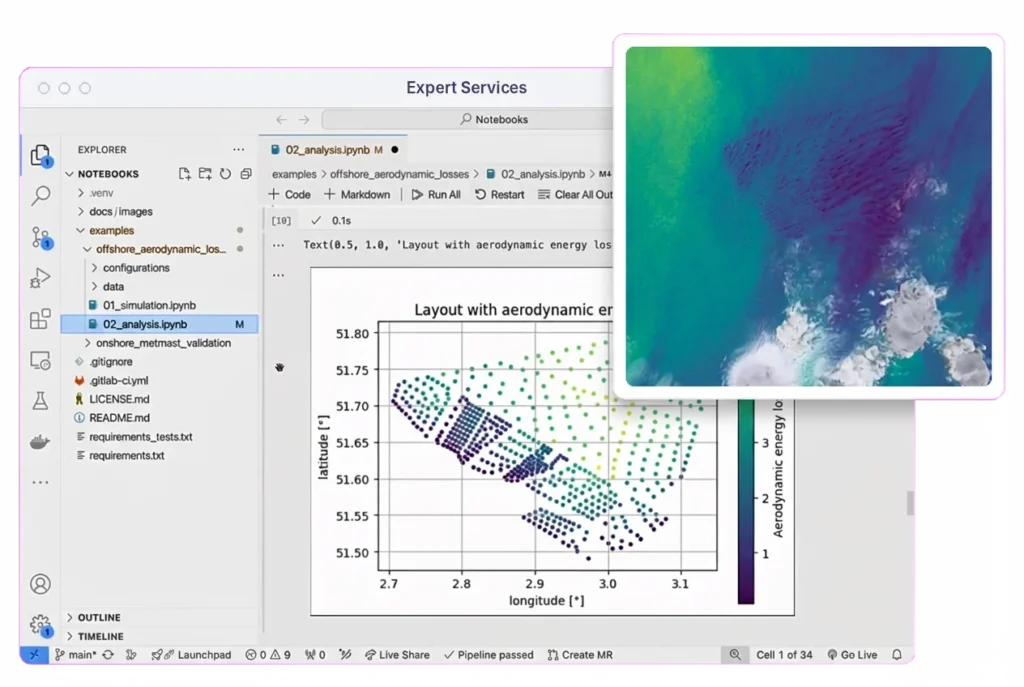
Use our data and forecasts, run our model on your own infrastructure, or work directly with our experts.
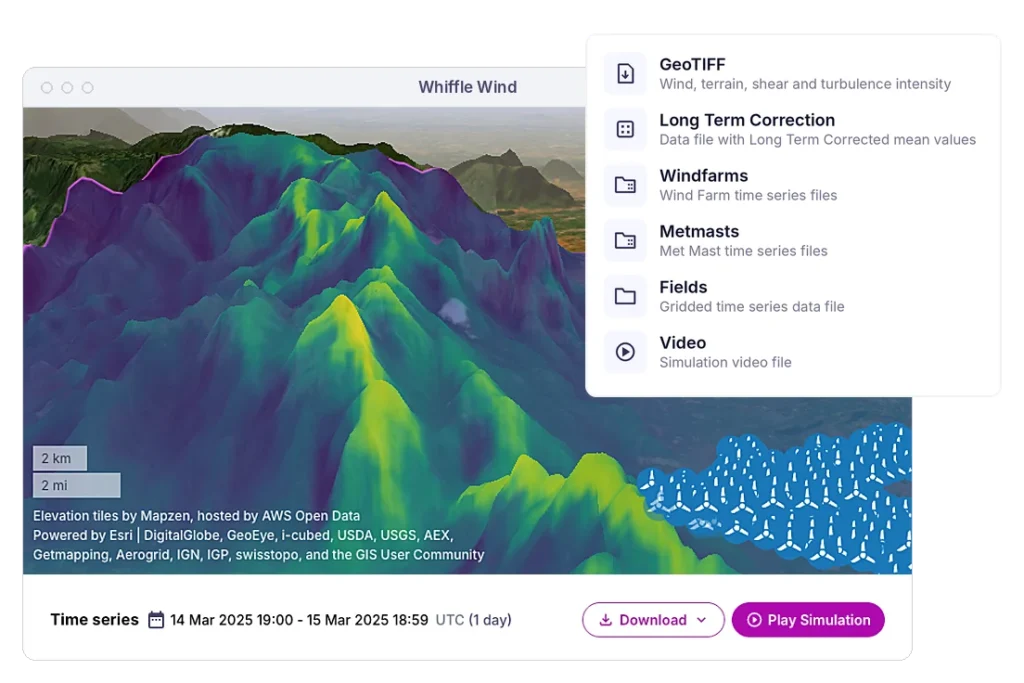
Whiffle Wind & Atlas
Screen sites, plan measurements and assess wind conditions, energy yield and turbine interactions with long-term weather data and LES in one self-service platform.
We highly value our collaboration with Whiffle and their LES technology, which provides deeper insights into wake and blockage effects. This partnership significantly improves our ability to assess energy risk, particularly as we move toward larger clusters of windfarms.
Kester Gunn
Chief Scientist, RWE
We have made Whiffle a standard part of our assessments going forward after some impressive performance at a few complex sites. Despite our significant time zone differences, the Whiffle team has always been appropriately responsive when we need help.
Jared Kassebaum
Director, Energy Team, EDF Power Solutions
Atlas is a major step forward in long-term wind modeling – driving deeper understanding of long term trends for projects dominated by mesoscale effects and terrain induced complex flows.
Jeffrey Snyder
Senior Wind Resource Analyst, GE Vernova
Through our joint development work, Whiffle Wind has become a core part of how we improve confidence in wind resource assessments for our most challenging onshore sites.
Andrew Davidson
Senior Wind Energy Analyst, Perigus Energy
We enjoy working with the Whiffle team. Their SaaS platform makes it easy to quickly access and run the analysis you need, and their Expert Services offers technical expertise and flexibility for those complex projects when required.
Daniel Link
Senior Wind Analyst, Tilt Renewables
Over the past three years, Whiffle has been a highly capable supplier in support of our offshore wind projects. Their easy-to-use platform and bespoke modeling services have consistently delivered quality results, making high-fidelity wind flow and turbine interaction calculations remarkably accessible and affordable.
Paul Housley
Senior Energy Yield Specialist, JERA Nex bp
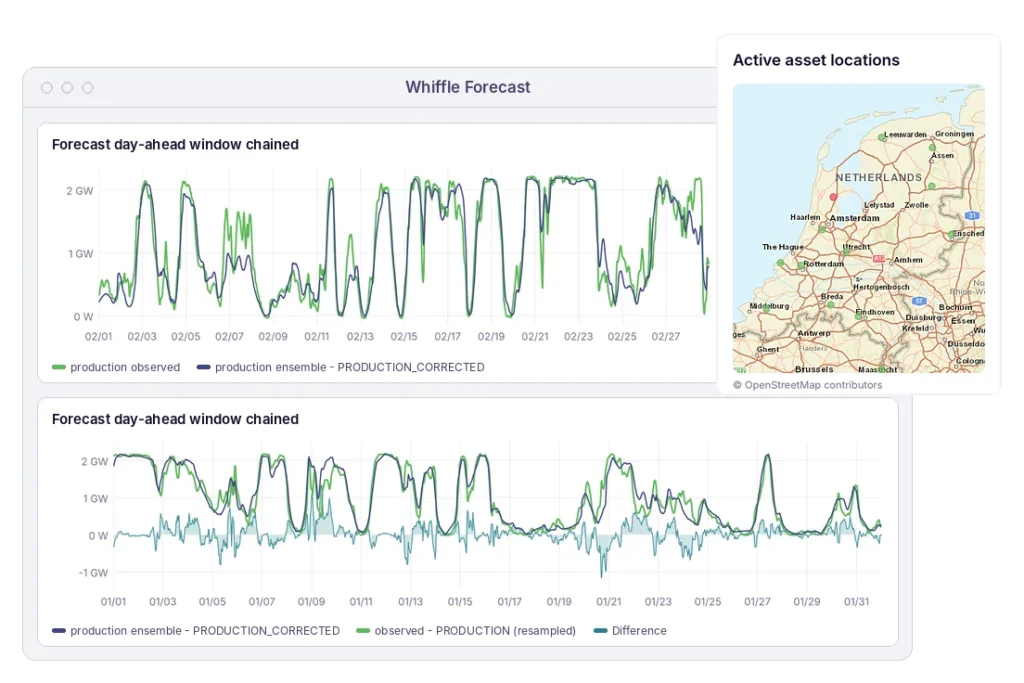
We use Whiffle’s forecasts in our day-to-day operations, so consistent delivery and forecast performance are critical. What we value is the combination of a reliable forecasting service, proactive monitoring, and direct access to the Whiffle team whenever something needs attention.
Lennard Pol
Asset & Quality Manager, Gemini Wind Park
Publications
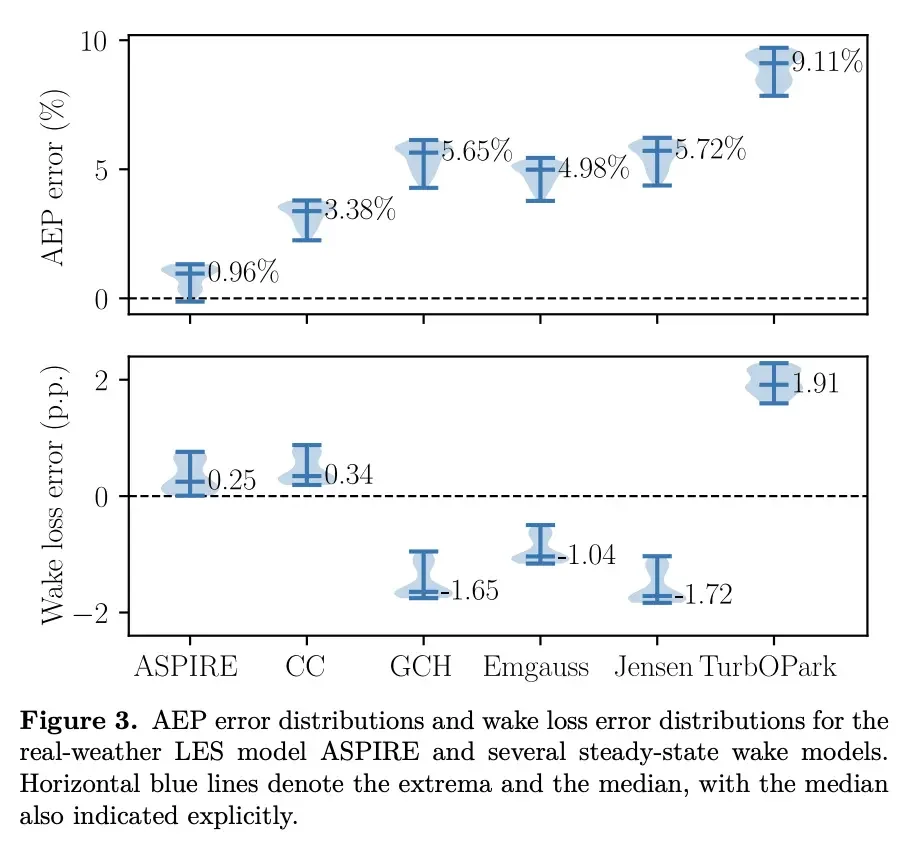
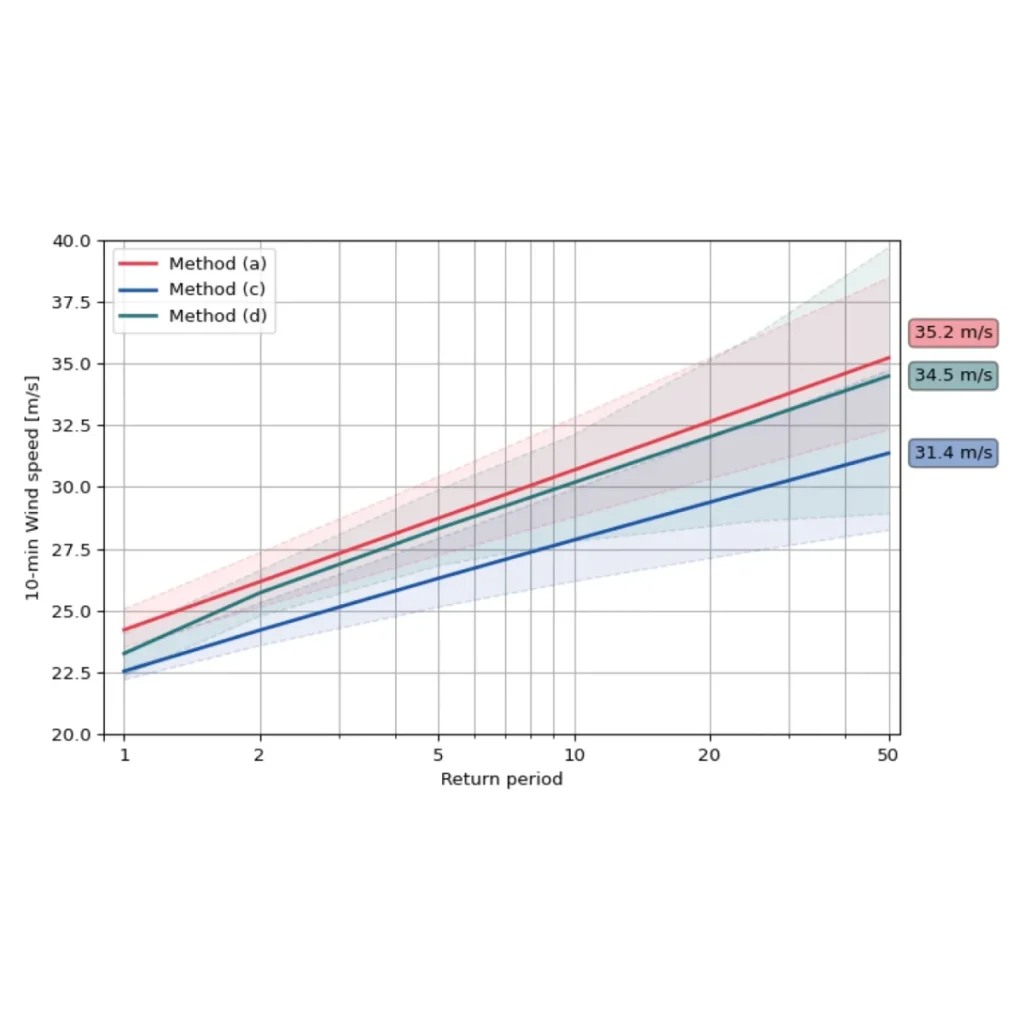
Proven against measurements and tested against the alternatives
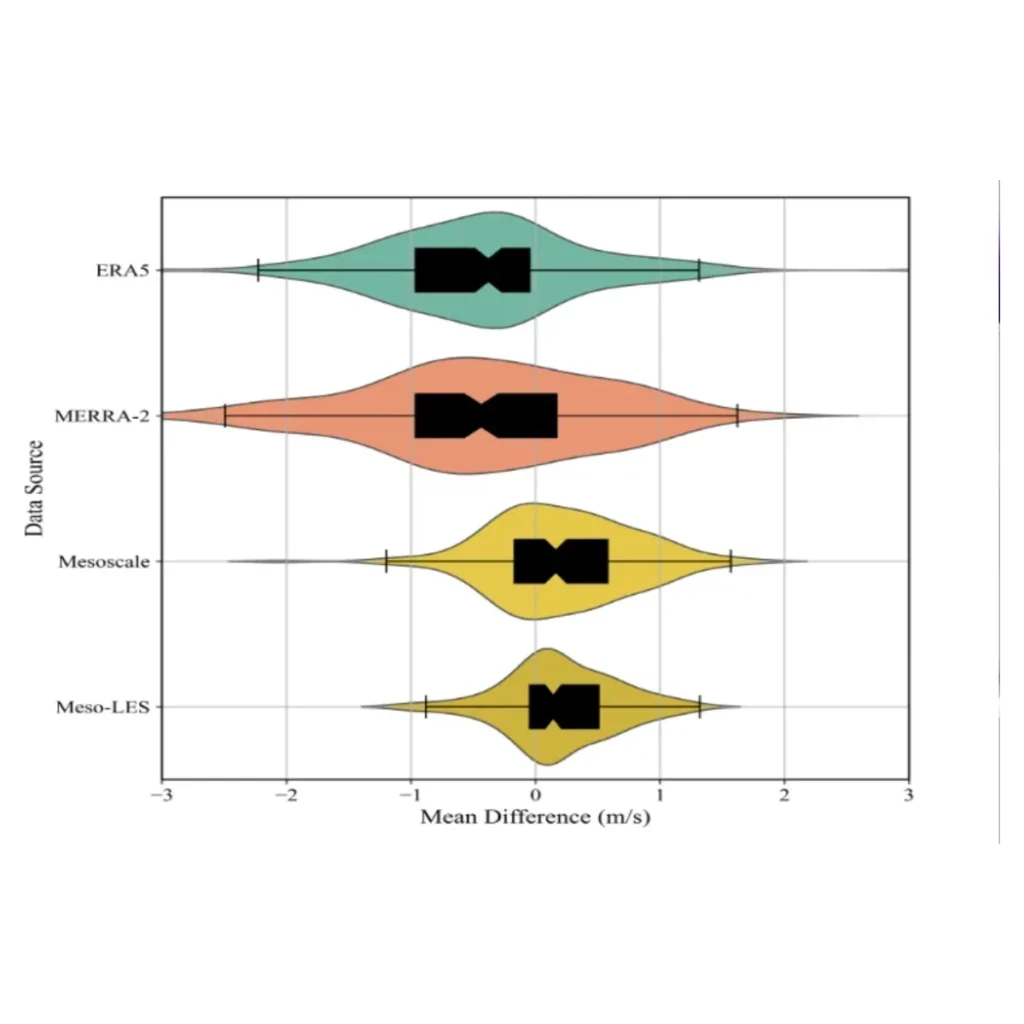
Explore studies demonstrating the accuracy and capabilities of Whiffle's atmospheric models, including comparisons with established modeling approaches.
Tell us what you're trying to understand, predict or assess. We'll help you explore how Whiffle's data, modeling or expertise could support your application.