From global weather patterns to meter-scale atmospheric detail. Whiffle combines mesoscale modeling and GPU-powered Large-Eddy Simulation (LES) to capture how weather develops and interacts with the local environment.
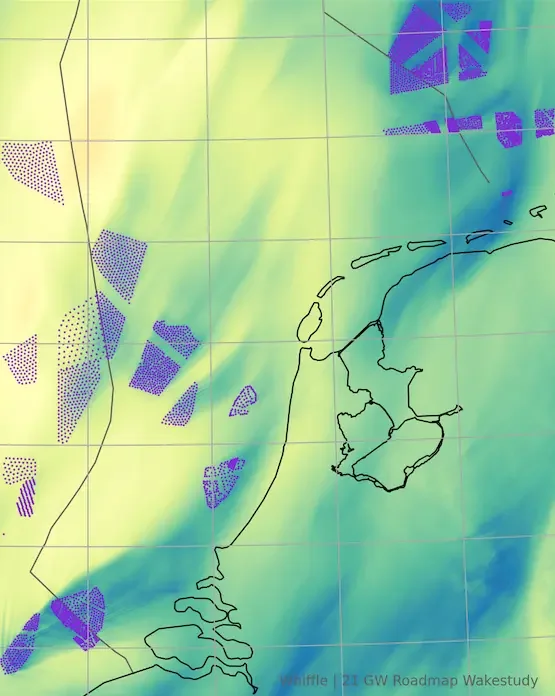
Whiffle connects large-scale weather data with mesoscale modeling and LES, capturing atmospheric processes at progressively finer scales, down to individual sites and structures.

Large-scale weather models provide the broader atmospheric conditions that drive regional and local weather.

Capture regional weather processes, including terrain effects and coastal influences, and provide conditions for high-resolution simulations.

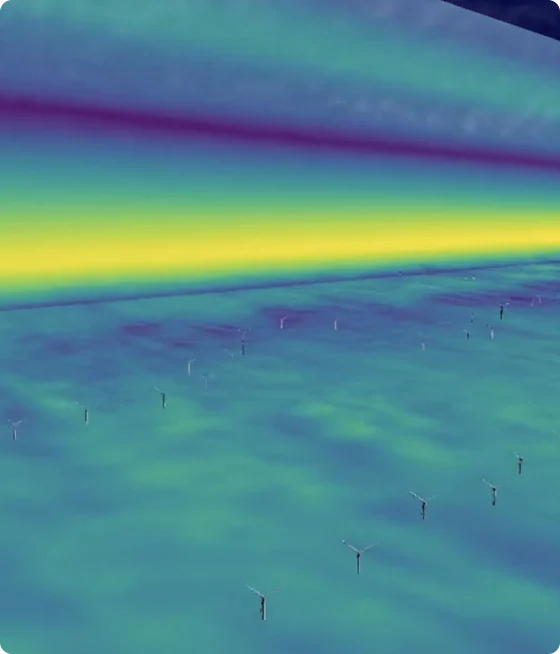
Resolve turbulence, clouds and local atmospheric flow, with finer nested simulations capturing conditions around individual sites and structures.
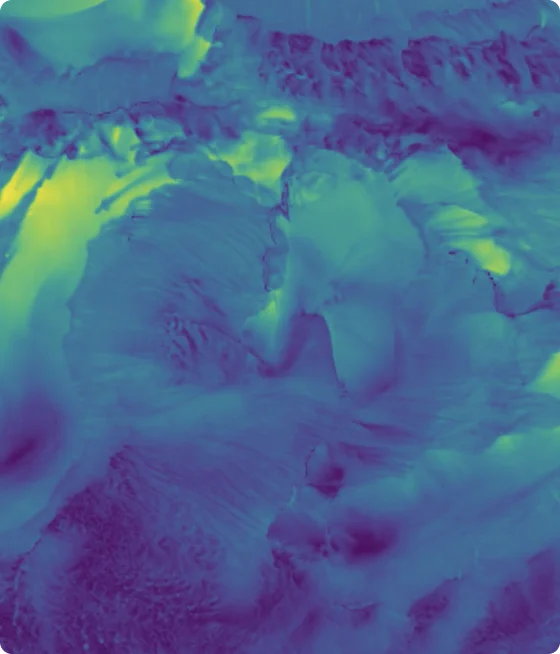
Our technology builds on decades of atmospheric research and continues to evolve through scientific development, published studies and comparisons with real-world measurements.
Our team can help you explore the modeling capabilities, technical possibilities and potential applications for your project.
Meter-scale weather simulation for the sectors where weather drives decisions.
Peer-reviewed papers and technical reports
Articles and perspectives from our team
Conferences, webinars and on-demand recordings
Technical guides for the Whiffle platform
Get help from our team
Atmospheric science and Whiffle news in your inbox
Explore simulations from wind farms to city streets